truerth.com brought me this tip.
This video says so much.
Is this MrE’s New Channel? https://www.youtube.com/channel/UCn0KdArswyw4IHKBB609cng

truerth.com brought me this tip.
This video says so much.
Is this MrE’s New Channel? https://www.youtube.com/channel/UCn0KdArswyw4IHKBB609cng
truerth.com brought me this tip.
MrE shocked us when he told us all the Hollywood actresses are more than likely biological males. Then he showed us most the government women are more than likely biological males. We didn’t believe him. We laughed at him. Then he SHOWED us. Then he disappeared. Is MrE back?
Here is the channel named Transpocalypse Now:
MrE’s New Channel? https://www.youtube.com/channel/UCn0KdArswyw4IHKBB609cng
Napoleon starts his retreat but he doesn’t seem like he wants to really call it that.
The beginning of the book can be found here:
https://www.youtube.com/playlist?list=PLeJCvClnhzjj-KIRi759Nt5dbonlGyJ1p
By Epaminondas Kolokouris
1. Napoleon was short.
Perhaps the most famous myth about Napoleon Bonaparte was the fact that he was short.
Fortunately, during the recent years, I ’ve seen this myth being exposed quite often in the popular media and most people are aware that it is not a true one. The creation of this myth can be summarized in three reasons. Firstly, the French foot is longer than the English one and therefore during his autopsy, Napoleon was reported to be 5,2 feet tall, while in fact he was 5,7 which was above the average height of the time.
The second reason is because of the famous British propaganda. Napoleon was usually portrayed as a short madman, or a short demon near a huge King George III, which was to demonstrate Britain’s superiority over her great adversary. Besides, demons are also believed to be short, wild and aggressive creatures which meant that giving Napoleon that look would encourage Britain’s superiority, but would also warn the people of the dangerous and threatening nature of their rival.
Lastly, Napoleon’s Imperial Guard was mostly included by veterans of huge stature and since those warriors were constantly near the Emperor, it was absolutely logical for his image to be conceived as shorter than it actually was.
2. Napoleon was afraid of cats
Another of the most famous myths about the Emperor, was that he suffered from ailurophobia but this is simply not true for the person of Emperor Napoleon I. The actual Bonaparte who suffered from that kind of phobia was Emperor Napoleon III (1808–1873) who also became President of the Second French Republic in 1848 and Emperor of the French in 1852.
In my opinion the reason for this confusion, is because Napoleon III is not nearly as famous as his uncle, but his phobia of cats was, and therefore the mixing didn’t take much time to occur.
3. Napoleon proclaimed himself Emperor.
This myth is actually believed even by historians or even Napoleonic amatures. I ’ve seen in a great number of articles the absurd statement that Napoleon “proclaimed himself Emperor” or I ’ve seen him being called as a “self-appointed Emperor”. This is absolutely not true. First of all there was a whole political backround behind the creation of the First Empire.
Firstly and most importantly, the French political establishment as well as the French people themselves, having lived through the terrors and instability of the Revolution, had come to the conclusion that one of the great advantages of the monarchy was stability, as long as this monarchy did not favor the clergy and nobility to the expense of its people. Many French therefore believed that the recreation of a new type of constitutional monarchy would ensure stability and would limit the chance of the return of the Bourbons in the case of Napoleon’s death (such as it happened in England with the Stuarts after the death of Cromwell).
You see, Napoleon was First Consul and by 1802, Consul for Life with the right to appoint his successor. However, many doubted the legitimacy and competence of this successor to ensure a smooth transition of power and prevent the eruption of chaos and anarchy. With a new monarchy, this would be different. (I know this sounds confusing but it is early 19th century politics which was influenced deeply but the 18th century ones).
This, along with the several attempted assassination attempts against Napoleon’s life, specifically the Pichegru-Cadoudal affair had caused deep concerns in both the French political establishment as well as the people. Soon enough, petitions from the departments were arriving en masse, begging Napoleon to take the crown. Apart from the matter of transition of power, it was also believed that a new monarchy would relieve the European courts from their fears of suffering the fate of Louis XVI.
The idea wasn’t even Napoleon’s brainchild and people often attribute it to the famous Talleyrand himself or to the French political elite in general. In May therefore, the Conservative Senate assembled and decided to give Napoleon the title of “Emperor of the French” and on 18th May 1804, in a 15-minute ceremony at Saint-Cloud, the Senate officially proclaimed Napoleon Bonaparte, as Emperor of the French. His famous coronation took place on 2 December 1804, after a referendum in November, which confirmed Napoleon’s accession to the new Imperial throne.
I personally believe that the creation of this myth can be found on the day of Napoleon’s coronation where he decided to put the crown on his own head, instead of allowing Pius VIII to do so. This has possibly left people to believe that when they read “he crowned himself Emperor” they conclude that this means that Napoleon “proclaimed himself Emperor” which is totally not one and the same.
4. Napoleon wished to conquer Russia and then the World.
While this myth is totally untrue, many people tend to believe it. The myth suggests that Napoleon’s sheer military success which had made him master of all Europe made Emperor arrogant and convinced that he could conquer the entire world. In order for him to do so, he had to crush Russia.
I cannot say how wrong is that, along with many other myths about the Russian Campaign itself. Napoleon only wished to defeat the two Russian armies which were deployed in modern Lithuania, crush them individually and then force the Tsar to the negotiating table where he could dictate peace on his terms, and specifically Russia’s return to the Continental System against Britain which Russia had abandoned in the late 1810.
Napoleon wasn’t even planning to go as far as Moscow as many people believe that he was planning to do. In a private conversation with Metternich, Napoleon told the Austrian foreign minister, that he was planning to go as far as Minsk and if he hadn’t scored a victory until that time he would stop there. To the famous Jomini, with whom he was dining, the Emperor bursted into laughter when the former asked if Napoleon had in mind to go to Moscow. Napoleon simply said, that a campaign deeper into Russia would take 2 years to be completed. Therefore, Napoleon was in no way planning to fight a long war deep in Russia, at least at the time the invasion was launched.
Now that we finished with Russia, let’s turn to the World. Emperor Napoleon, as most of European states of his time, was just trying to extend French influence wherever possible. Napoleon’s great victories allowed him to extend French influence to all of Europe and it is true, that Napoleon wouldn’t have stopped attempting to influence the whole world as far as possible if he was not stopped.
But conquering the globe and particularly militarily is completely absurd for someone to believe. Napoleon's greatest military intention at the height of his power was to defeat Britain, the most powerful of his rivals, in order to impose a final peace in Europe on his terms.
It is true however, that if somehow Napoleon had succeeded to decisively defeat Britain, it might have been the French who would have ruled the 1/5 of the entire world, not the British as it turned out. Indeed, the Napoleonic Wars decided the governor of the world for the rest of the 19th century.
I don’t know if Napoleon knew it, but he knew that if Britain was defeated, then the attempt of extending the power of France throughout the world would have been unstoppable and since Napoleon tried to defeat Britain it is logical for someone to assume that the French Emperor was indeed attempting to have the entire world bowed to his feet.
5. On his return from Elba, Napoleon planned to conquer Europe again!
Almost as absurd as the one with the world conquering.
When Napoleon triumphantly returned to Paris on 20 March 1815, all he wished was to retain the French throne for himself and ensure that it would be the Bonaparte dynasty which would rule France.
He didn’t want to provoke another huge Coalition which would rush to overthrow him. That is why he sent letters to every monarch, assuring them of his peaceful intentions. However, the European monarchical establishment was determined not to allow such a dangerous man on the throne of a power as mighty as France and therefore, armed almost 850.000 soldiers to destroy him once and for all.
In response to this Napoleon also began to arm his army and we all know what happened next. This myth has also created another one which is worthy of mentioning. This is the strategic importance of the Battle of Waterloo “which saved Europe” or that it was the battle which “decided the fate of Europe”.
This is simply not true. Even if Napoleon had decisively won the Waterloo Campaign, it is very likely that he would have been ultimately defeated somewhere else. If you look for a battle which decided the fate of Europe, you should take a look at Leipzig in October 1813.
6. Napoleon entered the Great Pyramid where he saw something…otherworldly.
There are certainly countless myths about the person of Napoleon, but this one includes some mystery connected with ancient Egypt and it is rather fascinating. In that myth, Napoleon supposedly entered the Great Pyramid and he asked to be left alone for a few moments in the King’s Chamber.
When the General came out, he was somehow shocked and asked nobody to speak about it ever again. In his deathbed at Saint Helena, a friend of Napoleon asked him what he had exactly witnessed inside the Chamber. Napoleon almost told him but then changed his mind telling him he wouldn’t believe it.
Fascinating myth indeed, at least to me.
Unfortunately though, it’s not a true one, since Bourienne, Napoleon’s private secretary and former classmate, who wrote in his memoirs that Bonaparte never entered the Great Pyramind in the first place, since he saw no reason to do that. All he did, was to send aides to report if there was anything worthy inside. The aides came back and said there was nothing.
They spent however a good time in the Pyramid where many of Napoleon’s team tried to climb at the top of the Great Pyramid and many of them did, including the famous Marshal Berthier. During that time, Napoleon told his team that the stones used for the construction of the Pyramid could build a three-metre wall all around France.
The mathematician Monge did the calculations in the future and concluded that Napoleon was correct.
7. Napoleon was responsible for the Napoleonic Wars.
Unfortunately, this is, in my opinion, the most unfair and widely-spread myth about Napoleon. This myth suggests that Napoleon, being the great commander he was, began a series of conflicts in an attempt to conquer Europe and as we said above, the entire world.
The European monarchies led by Britain attempted to put an end to the Corsican upstart’s plans by uniting against him and ultimately defeating him. Things however, are way more different and more complicated than that.
Historians tend to separate the French Revolutionary Wars (1792–1802) and the Napoleonic Wars (1803–1815), although this is quite odd, since those wars were named after the number of their respective coalition. The war which started in 1792 was named “War of the First Coalition”, the one in 1799 was named “War of the Second Coalition” and the one in 1805, now during the so-called Napoleonic era, was named “War of the Third Coalition” and so on until Waterloo where Napoleon faced the “Seventh Coalition”.
I do not therefore, understand as to why historians separate the two time periods.
The French Revolutionary and Napoleonic Wars were nothing but a series of European coalitions formed against France and generously subsided by the British government in the attempt to overthrow the Republican and later Imperial regime which were established after King Louis XVI’s deposition in 1792. During the start of those wars, Napoleon was an insignificant artillery captain who was by then going back and forth from France to Corsica in an attempt to establish himself as an important political figure in the island’s politics [this attempt ended disastrously].
However, I do not suggest to the least that Napoleon was entirely innocent.
For instance, the Peninsular War began due to Napoleon’s opportunistic attempt to take advantage of the Spanish chaotic political situation and turn Spain into a puppet state which was to be ruled by his brother, Joseph Bonaparte. This war cost dearly to France, since she wasted manpower and resources that would have been invaluable if they were used elsewhere.
The invasion of Russia was also instigated by Napoleon, but I cannot blame him for launching it.
In Napoleon’s mind the Russian affair was to be a fifty-day campaign where he would crush the Russian armies in one or two decisive battles in order to force the Tsar to renter the Continental System and ensure Britain’s defeat.
It is noteworthy that Napoleon offered peace to Britain four times during the so-called period of the “Napoleonic Wars” and were all rejected, even the one he made in 1812, briefly before the Russian Campaign began. However, had Britain not been so persevering in continuing the war against Napoleon, the invasion of Russia would have never happened.
When Napoleon returned from Elba, he assured all nations of his peaceful intentions but Britain, once again would hear none of it and began subsidizing the Continental allies, once more. If you look for a nation mostly responsible for the Napoleonic Wars, you should just turn your attention to the “nation of shop-keepers”.
Now the reason of this myth is obvious.
I am not currently aware of who was exactly responsible for naming the Coalition Wars, as “Napoleonic Wars” but whoever did it, either intentionally or not, it damaged Napoleon’s reputation greatly, since people who are not well-informed about the Napoleonic era will easily conclude that these conflicts bear the name of the person who is mostly or even solely responsible for them.
The fact that the Emperor is also mostly famous for his military feats, as well as propaganda from Napoleon’s critics doesn’t help things either into preventing people from thinking that the Emperor was a tyrannical warmonger.
Other noteworthy myths.
Please ask yourself why this person has been so maligned.
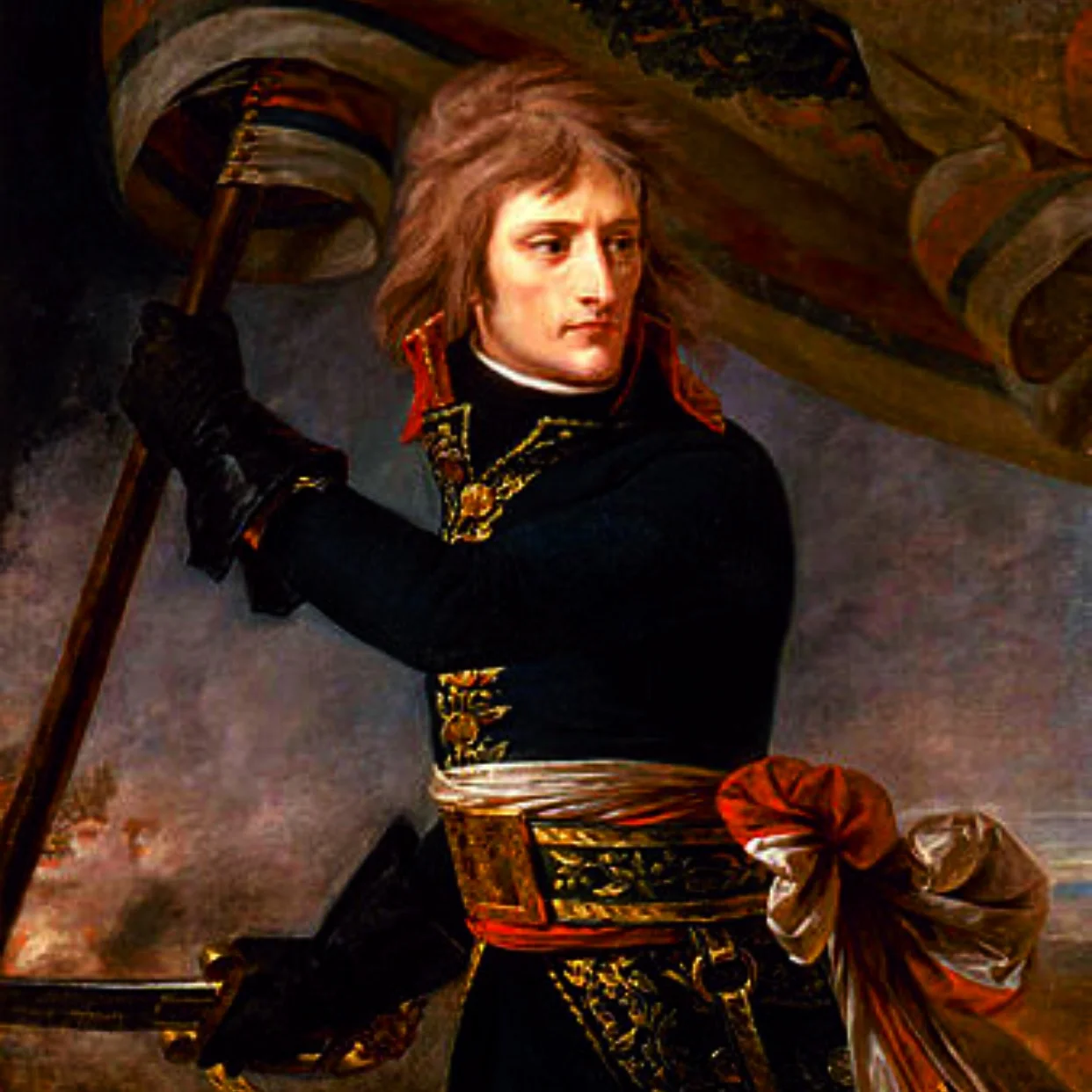
I know there’s a lot more to this than they’re saying. Crafting the narrative to suit the wishes of those who pay to keep secrets secret.
Imagine a world where this story could actually be told Truthfully.
Why are there all these cults particularly since the 60s? In California and New York? Why are all these young and beautiful types drawn to luciferian dominators? What about their past made this attractive to them?
When I met the cult leader who entranced me, the first thing he said was: “you were abused as a child”.
Looking back, I think he thought he was hitting the jackpot just knowing that one thing about me. I thought he was “real” for divining this intel.
An abusive childhood is what sets us up for the twisted mind tricks of a diabolical predator. If my parents had shown me a glimmer of love, I wouldn’t have fallen for the glib tricks of a conman. The only reason I am doing as well as I am is because I am spiritually connected to the Creator. I KNOW I’m loved.
There is so much more that THAT THEY’RE NOT SAYING.

Is the narrative being crafted to leave out major details that really do matter to the rest of us? Only Time will tell: