

#foggy #water thetanster.com

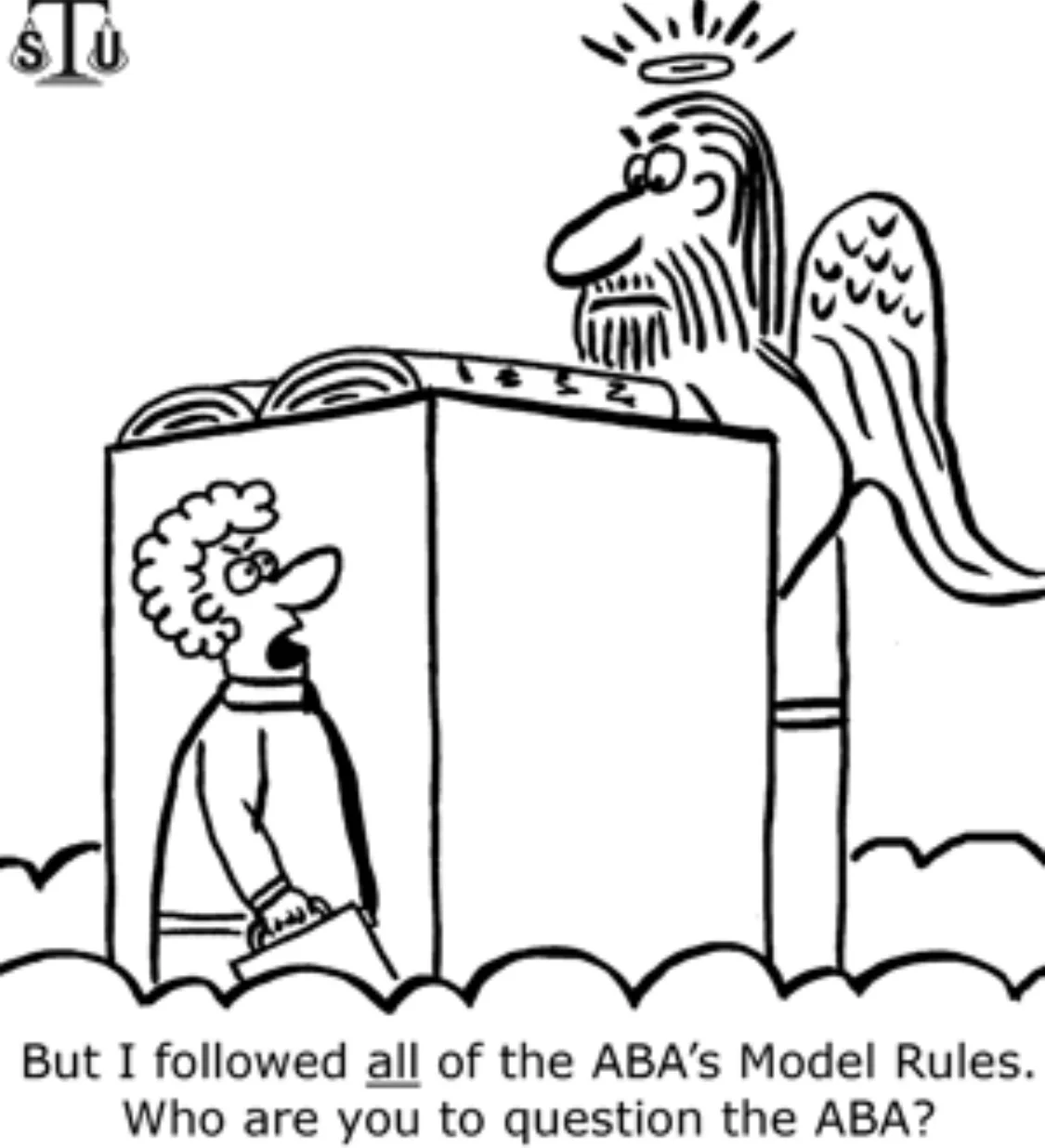
Here’s some rules for the ethical conduct for lawyers in New York State.
A lawyer should not work with clients who are engaged in fraudulent activity.
A lawyer should not work with clients who are engaged in harassing a client with frivolous litigation.
A lawyer should not work with clients who are engaged in filing a complaint that has lies in it.
A lawyer should not work with clients who are engaged in filing an action that does not conform to existing law.
A lawyer who does these things in any way is risking their law license and their entire career.
Read further if you’d like to know about the disciplinary rules for a lawyer in New York State.
New York Disciplinary Rules for lawyer
DR 2-110
B. Mandatory withdrawal.
A lawyer representing a client before a tribunal, with its permission if required by its rules, shall withdraw from employment, and a lawyer representing a client in other matters shall withdraw from employment, if:
1. The lawyer knows or it is obvious that the client is bringing the legal action, conducting the defense, or asserting a position in the litigation, or is otherwise having steps taken, merely for the purpose of harassing or maliciously injuring any person.
C. Permissive withdrawal.
1. The client:
a. Insists upon presenting a claim or defense that is not warranted under existing law and cannot be supported by good faith argument for an extension, modification, or reversal of existing law.
b. Persists in a course of action involving the lawyer's services that the lawyer reasonably believes is criminal or fraudulent.

If you see “spiritual” people who lie. Then you know all you need to know about them.

How do narcissistic personalities manage their relationships?
By Michaela Scott
I wouldn’t say they “manage” relationships and give mutual consideration to their counterpart. It is truly a one-sided “relationship”. They do not reflect on how to work out differences. Everything they do in any and all of their relationships, is purely reactive (this means, without thought or consideration), and selfish.
It helps to remember they harbor the effects of early trauma, deeply. So deep, they never reflect upon it, it is too painful for them to remember, or safely take another look at. If you brought it up to them, they would deny knowing what you are talking about, because they never look at it, they don’t remember it, they don’t acknowledge it, they have no evolved thoughts or considerations about it. There is nothing there to heal, as far as they are concerned.
What you see narcissists “do”, on a daily, if not hourly, basis, is manage their frail and damaged ego. This takes up a LOT of their energy and time.
They must constantly protect and be hyper-vigilant about, hiding their weaknesses and/or imperfections, constantly bringing up the good qualities they want everyone to see which will hide the imperfections they want to have remain hidden. They do this, in often, aggressive ways. To the outside person, looking in, it appears strange and hyper-reactive.
They will go on “the attack” toward anyone who throws a criticism, no matter how small or benign, in their direction. It is perceived as “an attack”, or a dangerous exposure of their imperfection to the world. Retaliation must be aggressive and immediate. Lies are absolutely on the table as weapons against you, and destroying your integrity is imperative in order to protect their fragile ego. They will even build a base of allies to help them fortify their agenda and their ego, simultaneously.

What are examples of things that a narcissist says to gaslight you?
By Patricia Jones Harris
I was married to a Narcissist for 25 years without realizing it until the last couple of years. Once I finally divorced, I began the recovery process from the Narcissistic Abuse I endured over the years. Not only did I have to recover from the C-PTSD I also went through the grieving process. One of the most critical steps of the grieving process is education. I spent months researching Narcissistic Personality Disorder. Not only did I need to understand what happened I needed to learn how a Narcissist thinks. One of the first things I learned about was gaslighting.
What is gaslighting?
As I started to embark upon my quest to understand everything about Narcissistic Personality Disorder one of the first terms I learned about was gaslighting. Gaslighting is a form of emotional abuse where the Narcissist manipulates situations repeatedly with the intent to trick the victim into having doubts about their memory and perceptions. I find Gaslighting to be a insidious form of abuse. It resulted in my questioning the very instincts that I have counted on my whole life leaving me unsure of anything. Gaslighting made it so I believed whatever my ex husband would tell me regardless of what my own experience was of the situation.
Origin of the term “gaslighting”.
The term "gaslighting" comes from the 1938 British play "Gas Light" wherein a husband attempts to drive his wife crazy using a variety of tricks causing her to question her own perceptions and sanity. Then in 1940 and again in 1944 Gas Light was made into a movie.
Gaslighting Techniques
I discovered there are numerous gaslighting techniques used making it difficult to identify when someone is gaslighting you. My ex husband used Gaslighting techniques to hide the truth from me. Men and women both are guilty of engaging in Gaslighting abuse.
Withholding
"Withholding" is a gaslighting technique where the Narcissist will mislead you by claiming a lack of understanding, refusing to listen and declining to sharing their emotions.
Examples of Withholding:
"I'm not listening to that crap again tonight."
"You're just trying to confuse me."
Countering
Another gaslighting technique is "countering," where an abuser will vehemently call into question a victim's memory in spite of the victim having remembered things correctly.
Examples of Countering:
"Think about when you didn't remember things correctly last time."
"You thought that last time and you were wrong."
These techniques throw the victim off the intended subject matter and make them question their own motivations and perceptions rather than the issue at hand. It is then that the abuser will start to question the experiences, thoughts and opinions more globally through statements said in anger like:
"You see everything in the most negative way."
"Well you obviously never believed in me then."
"You have an overactive imagination."
Blocking and Diverting
“Blocking" and "diverting" are gaslighting techniques whereby the abuser again changes the conversation from the subject matter to questioning the victim's thoughts and controlling the conversation.
Examples of Blocking and Diverting:
"I'm not going through that again."
"Where did you get a crazy idea like that?"
"Quit bitching."
"You're hurting me on purpose."
Trivializing
"Trivializing" is another way of gaslighting. It involves making the victim believe his or her thoughts or needs aren't important.
Examples of Trivializing:
"You're going to let something like that come between us?"
Forgetting and Denial
Abusive "forgetting" and "denial" can also be forms of gaslighting. In this technique, the abuser pretends to forget things that have really occurred; the abuser may also deny things like promises that have been made that are important to the victim.
Examples of Forgetting and Denial:
"What are you talking about?"
"I don't have to take this.”
“You're making that up."
Wrongdoing and Misperception
Some gaslighters will then mock the victim for their "wrongdoings" and "misperceptions." The gaslighting techniques are used in conjunction to try to make the victim doubt their own thoughts, memories and actions. Soon the victim is scared to bring up any topic at all for fear they are "wrong" about it or don't remember the situation correctly. The worst gaslighters will even create situations that allow for the usage of gaslighting techniques.
An example of this is taking the victim's keys from the place where they are always left, making the victim think she has misplaced them. Then "helping" the victim with her "bad memory" find the keys.
How do I know if I have been abused by Gaslighting?
Do I find I am second-guessing myself on a consistent basis?
Am I always having to ask myself daily if I am just too sensitive?
Do I often times feel confused when at work almost to the point that I believe I am going crazy?
Do I find it hard to understand why I feel so down with all the good things in my life?
At times do you find yourself making excuses for your partner’s behavior to your family and friends?
Are you starting to think something must be wrong as lately it seems you can't do anything right?
Have you found yourself withholding information from friends and family so you don't have to explain or make excuses.
Your intuition tells you something is terribly wrong, but you can never quite express what it is, even to yourself.
Have you started lying to just avoid having to deal with the put downs and strange mental twists on reality?
Are you finding yourself having a difficult time making decisions, even simple decisions?
Do you feel like you don't even know who you are anymore, like you are a completely different person who is less confident, always feeling down and on edge?
Are you starting to feel hopelessness?
Have you started to doubt your self-worth whether you are a good enough girlfriend, wife, co-worker?

The story of a new age guru who thinks it’s smart to sue people to keep the Truth from getting out.
#crochet #waistcoat #stitch thetanster.com
